

What Information Is Needed Before Rotor Balancing?
A practical checklist covering rotor mass, dimensions, journals, speed, construction and the reported vibration problem.
Read Article →Technical articles
Articles on getting the right balance.
A practical checklist covering rotor mass, dimensions, journals, speed, construction and the reported vibration problem.
Read Article →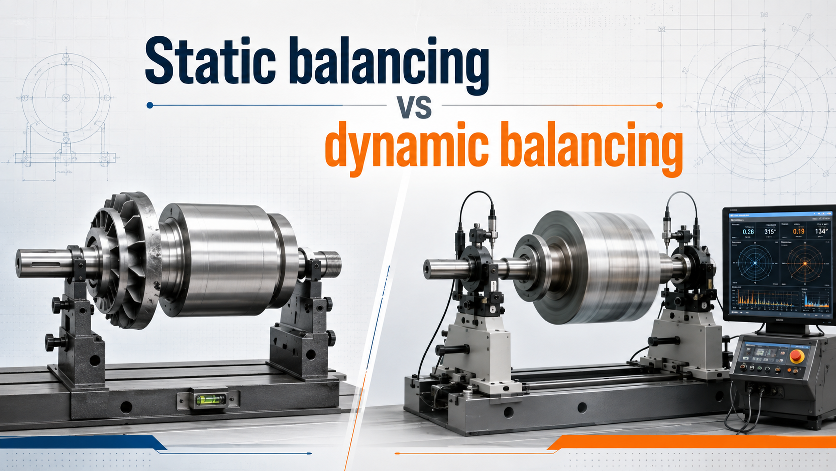
The difference between static and dynamic balancing, why a rotor can have no heavy spot yet still vibrate, and when two-plane balancing is required.
Read Article →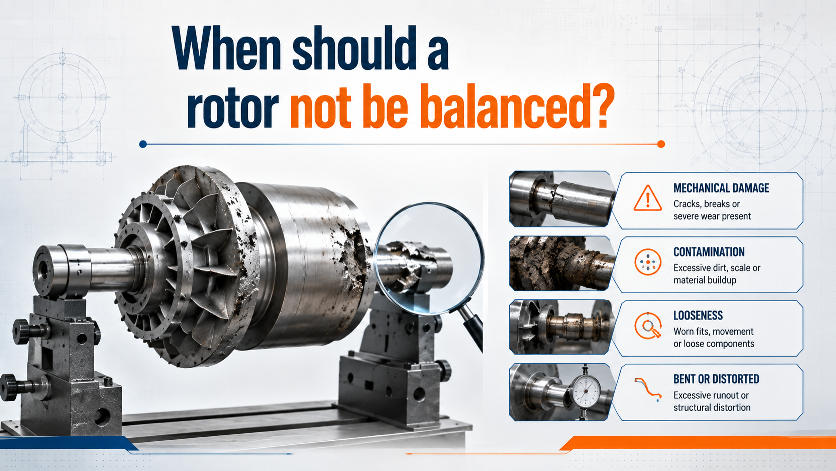
Cases where balancing should stop and the rotor should be repaired, cleaned, inspected or otherwise made mechanically safe before correction weights are applied.
Read Article →
Why the key condition matters during balancing and how the ISO 21940-32 half-key convention prevents artificial unbalance in separately balanced components.
Read Article →
Common reasons fan and impeller balancing results are inconsistent, including deposits, fit eccentricity, runout, repair distortion and assembly repeatability.
Read Article →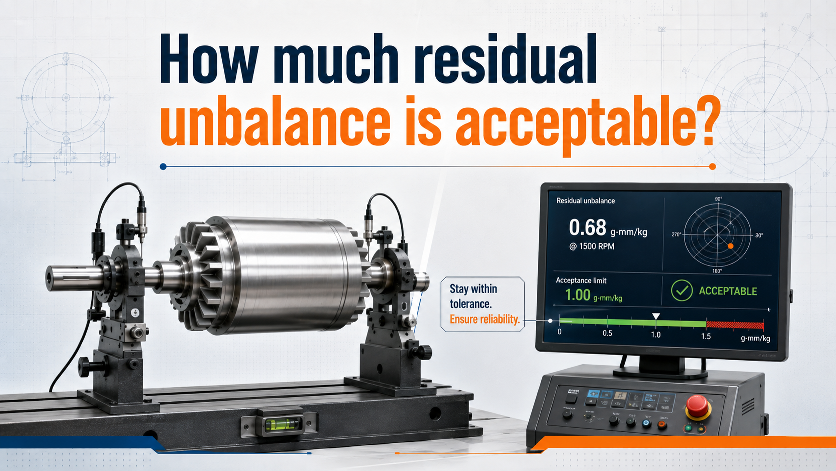
How to calculate a meaningful residual-unbalance tolerance from rotor mass, speed and balance grade, and why grams alone are not enough.
Read Article →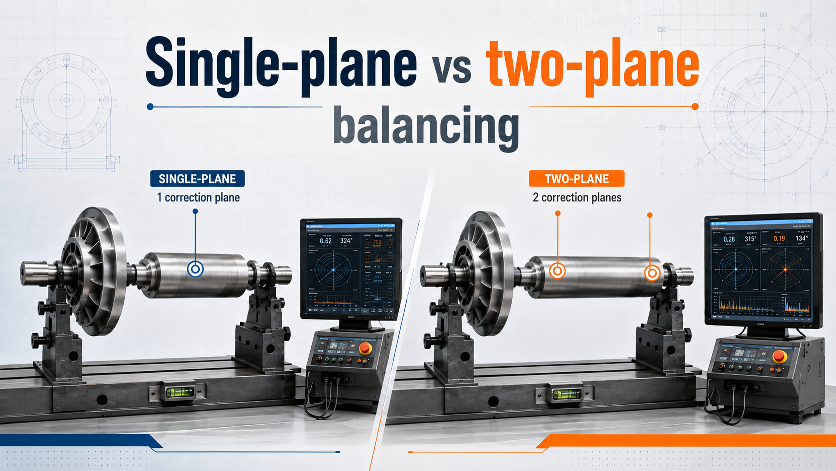
When one correction plane is enough, when two planes are required, and why a rotor can be statically balanced yet still contain couple unbalance.
Read Article →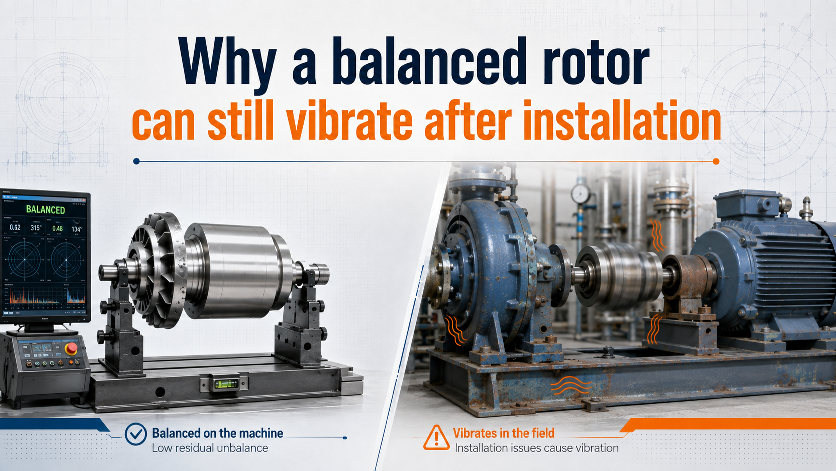
A rotor can pass a balancing-machine residual-unbalance check and still produce high machine vibration. Here are the main reasons and how to separate them.
Read Article →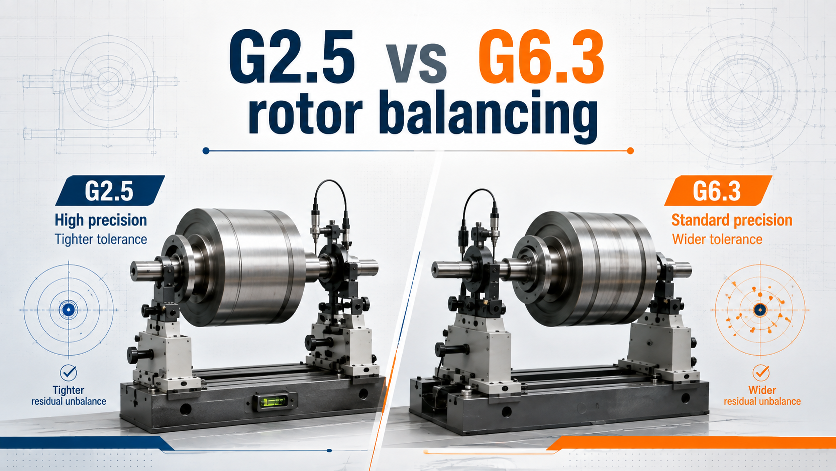
A practical comparison of G2.5 and G6.3 balance grades, including how much tighter G2.5 is and when a tighter grade is actually useful.
Read Article →
How to choose a rotor balance quality grade without treating G2.5 or G6.3 as universal answers, and how speed and rotor mass affect residual-unbalance tolerance.
Read Article →